
Global Air Conditioner Market Trends to Watch sets the stage for this enthralling narrative, offering readers a glimpse into a story that is rich in detail and brimming with originality. From the history of the market to technological innovations and sustainability measures, this topic delves into the dynamics shaping the air conditioning industry.
As we navigate through the different facets of the global air conditioner market, a deeper understanding of its trends and future directions will emerge, providing valuable insights for businesses and consumers alike.
Overview of the Global Air Conditioner Market

The global air conditioner market has a rich history dating back to the early 20th century when the first air conditioning systems were introduced. Over the years, advancements in technology and the increasing demand for cooling solutions have propelled the market to new heights.
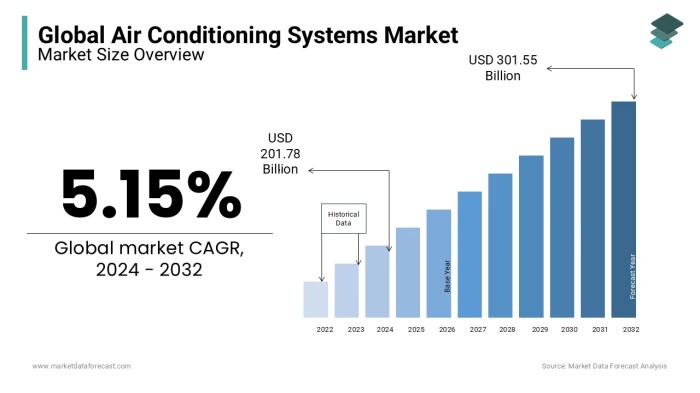
Currently, the global air conditioner market is experiencing steady growth, driven by factors such as rising temperatures, urbanization, and changing consumer preferences. The market size is expected to continue expanding in the coming years, with a growing focus on energy efficiency and eco-friendly solutions.
Key Players and Competitors
- Daikin Industries Ltd.: A Japanese multinational company known for its innovative air conditioning solutions.
- Carrier Global Corporation: A leading provider of heating, ventilating, and air conditioning (HVAC) systems worldwide.
- Gree Electric Appliances Inc.: A Chinese company specializing in air conditioners and other home appliances.
- Mitsubishi Electric Corporation: A global player in the air conditioning market, offering a wide range of products for residential and commercial use.
Technological Innovations in Air Conditioners
Recent advancements in air conditioning systems have revolutionized the way we cool our spaces. Traditional AC units have been replaced by smart and energy-efficient models that offer improved performance and sustainability.
Smart AC Units
- Smart air conditioners are equipped with sensors and Wi-Fi connectivity, allowing users to control the temperature remotely through smartphone apps or voice commands.
- These units can adjust settings based on occupancy, weather conditions, and user preferences, optimizing energy consumption and reducing utility costs.
- Some smart AC units also offer integration with smart home systems, enabling seamless automation and energy-saving features.
Energy-Efficient Models
- Energy-efficient air conditioners use advanced technologies such as variable-speed compressors, inverter technology, and improved insulation to minimize energy wastage and reduce environmental impact.
- These models consume less electricity while providing consistent cooling performance, making them cost-effective and environmentally friendly.
- Energy-efficient air conditioners are increasingly popular due to their long-term savings on electricity bills and their contribution to sustainability efforts.
Impact of IoT Integration
- IoT integration has transformed the air conditioner market by enabling seamless connectivity and smart features that enhance user experience and efficiency.
- IoT-enabled air conditioners can be controlled remotely, monitored for performance analytics, and even programmed to operate based on personalized schedules and preferences.
- This integration not only improves convenience for users but also allows for predictive maintenance, energy optimization, and overall better management of cooling systems.
Environmental Impact and Sustainability Measures
As the demand for air conditioners continues to rise, so do the environmental challenges associated with their usage. The release of greenhouse gases, such as hydrofluorocarbons (HFCs), from air conditioners contributes to global warming and ozone depletion, posing a significant threat to our planet.
Eco-friendly Refrigerants and Energy-saving Designs
In response to these environmental concerns, the air conditioner industry is shifting towards eco-friendly refrigerants and energy-saving designs
Additionally, energy-efficient models are being developed to minimize electricity consumption and lower overall carbon emissions.
Regulations and Policies
- Government regulations and policies play a crucial role in driving sustainability efforts within the air conditioner industry. Countries around the world are implementing strict guidelines to phase out the use of HFCs and promote the adoption of greener alternatives.
- International agreements, such as the Kigali Amendment to the Montreal Protocol, aim to reduce the production and consumption of HFCs globally, further encouraging manufacturers to prioritize sustainability in their product development.
- Incentive programs and energy efficiency standards are also being introduced to encourage consumers to choose environmentally friendly air conditioners and incentivize manufacturers to innovate in sustainable practices.
Regional Market Trends and Emerging Markets
In the global air conditioner market, different regions play a crucial role in driving growth and shaping industry trends. Let's explore the key regional markets and compare the demand between developed and emerging markets, while also considering the influence of cultural factors on air conditioner preferences worldwide.
Key Regional Markets
- Asia-Pacific: The Asia-Pacific region, particularly countries like China, Japan, and India, is a significant driver of growth in the air conditioner market. The increasing urbanization, rising disposable income, and changing climate patterns contribute to the high demand for air conditioning systems in this region.
- North America: Developed markets like the United States and Canada have a mature air conditioner market with a focus on energy-efficient solutions and smart technologies. The replacement market is strong in this region, driven by the need for more sustainable cooling options.
- Europe: Countries in Europe are also embracing energy-efficient air conditioning solutions to combat climate change and reduce carbon emissions. The demand for eco-friendly cooling systems is on the rise, leading to a shift towards more sustainable options.
Comparison of Developed and Emerging Markets
- Developed markets often prioritize energy efficiency, smart technologies, and sustainability in air conditioner products. In contrast, emerging markets may focus more on affordability, cooling capacity, and basic features due to varying economic conditions and infrastructure limitations.
- Emerging markets show a higher growth potential as they continue to industrialize and urbanize, leading to an increased demand for air conditioning solutions. However, challenges such as environmental regulations, quality standards, and consumer awareness need to be addressed in these markets.
Cultural Factors and Air Conditioner Preferences
- Cultural factors play a significant role in determining air conditioner preferences globally. For example, in countries with hot and humid climates, air conditioning is considered a necessity rather than a luxury, leading to higher demand for cooling solutions.
- In some regions, cultural norms and traditions influence the design and features of air conditioners. Preferences for specific cooling capacities, noise levels, and aesthetics can vary based on cultural perceptions of comfort and lifestyle choices.
Wrap-Up
In conclusion, Global Air Conditioner Market Trends to Watch encapsulates the pulse of an industry in flux, where innovation meets sustainability and market dynamics drive change. With a keen eye on emerging markets, technological advancements, and environmental considerations, the future of air conditioning looks promising yet challenging.
Stay tuned for more updates on this evolving landscape.
Essential Questionnaire
How do cultural factors influence air conditioner preferences globally?
Cultural factors such as climate, lifestyle, and economic conditions play a significant role in shaping air conditioner preferences worldwide. For example, regions with hot climates may prioritize cooling efficiency, while areas with high energy costs might lean towards energy-saving models.
What are the recent technological advancements in air conditioning systems?
Recent advancements in air conditioning systems include smart features for remote control, energy-efficient designs, and improved air quality sensors. These technologies aim to enhance user experience, reduce energy consumption, and promote sustainability in the industry.
How is IoT integration impacting the air conditioner market?
IoT integration in air conditioners allows for remote monitoring, predictive maintenance, and personalized settings based on user preferences. This connectivity enhances efficiency, convenience, and overall performance of the air conditioning systems, shaping the market towards smart solutions.