
Delving into the decision between split and central air conditioning systems opens up a world of choices for homeowners. This guide will walk you through the key factors, installation processes, performance insights, and maintenance tips to help you make an informed decision tailored to your needs.
Factors to Consider
When deciding between split and central air conditioning systems, there are several key factors to consider to ensure you choose the right option for your home.
Size and Layout of Your Home
Determining the size and layout of your home is crucial in selecting the most suitable air conditioning system. Split systems are ideal for smaller homes or spaces where ductwork installation is not feasible. On the other hand, central air conditioning is more suitable for larger homes with existing ductwork infrastructure.
Cost and Maintenance Expenses
The initial cost of installing a central air conditioning system is typically higher than that of a split system, especially if ductwork needs to be added. However, split systems may require more frequent maintenance due to the separate units. Consider both the upfront costs and long-term maintenance expenses before making a decision.
Energy Efficiency
Split air conditioning systems are known for their energy efficiency, as they allow for zoning and individual temperature control in different areas of the home. Central air conditioning systems, while efficient, may lead to energy wastage if not properly zoned.
Consider the energy efficiency of both systems to determine which option will help you save on utility bills in the long run.
Installation Process
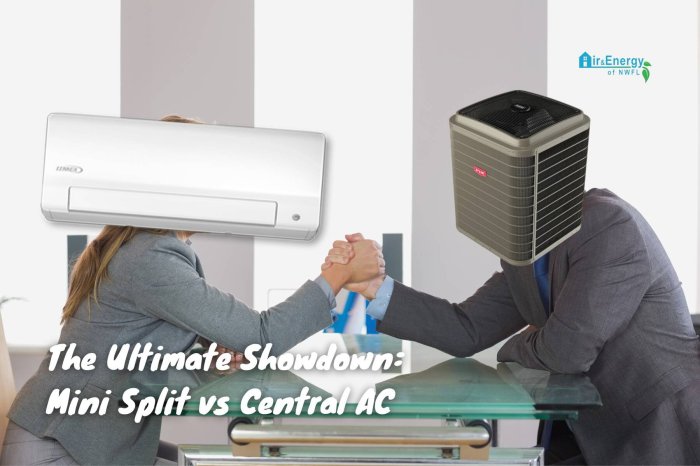
When it comes to installing air conditioning systems, both split and central units have distinct processes that require different levels of expertise and time commitment.
Split Air Conditioning Systems
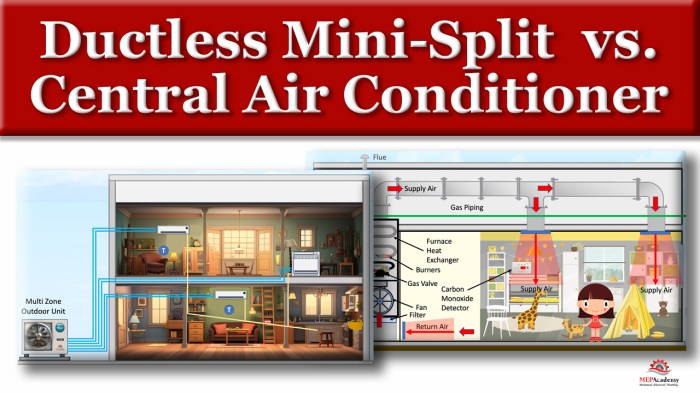
Installing a split air conditioning system involves mounting the indoor unit on a wall inside the room and connecting it to an outdoor unit placed outside the building. The installation process includes drilling holes for piping, electrical connections, and drainage.
It is relatively straightforward and can be completed by a qualified HVAC technician in a few hours.
Central Air Conditioning Systems
On the other hand, installing a central air conditioning system is more complex and requires careful planning. It involves setting up ductwork throughout the house to distribute cool air effectively. The installation process for a central system can take several days to complete due to the extensive ductwork and electrical work involved.
Role of Professionals
For both split and central air conditioning systems, it is crucial to hire professionals for installation to ensure proper setup and optimal performance. HVAC technicians have the expertise and tools to handle the installation process safely and efficiently. Attempting to install these systems without professional help can lead to costly mistakes and potential safety hazards.
Time Comparison
Overall, split air conditioning systems have a quicker installation process compared to central systems. Split units can typically be installed in a matter of hours, while central systems may take several days to complete due to their complexity. The time needed for installation is an important factor to consider when choosing between split and central air conditioning units.
Performance and Effectiveness
When it comes to the performance and effectiveness of air conditioning systems, several factors come into play that can make a significant difference in your overall comfort and satisfaction. Let's dive into the key aspects of cooling capacity, noise levels, temperature consistency, and airflow distribution efficiency of split and central air conditioning units.
Cooling Capacity
The cooling capacity of an air conditioning system is measured in British Thermal Units (BTUs) per hour, indicating the amount of heat the system can remove from a space. In general, central air conditioning systems tend to have higher cooling capacities compared to split systems, making them more suitable for larger homes or commercial spaces.
However, split systems can also be effective in cooling smaller areas efficiently.
Noise Levels
One important consideration when choosing between split and central air conditioning systems is the noise level during operation. Central systems typically generate more noise since the entire unit is located outside the building, while split systems have a quieter operation as the noisy components are placed outside.
Temperature Consistency
Both split and central air conditioning systems can maintain consistent temperatures within a space. However, central systems may have a slight edge in temperature consistency since they distribute air more evenly throughout the entire space. Split systems, on the other hand, may have temperature variations in different rooms depending on the system's design and installation.
Airflow Distribution Efficiency
Central air conditioning systems are known for their efficient airflow distribution, as they use ductwork to deliver cooled air to all areas of a building. This ensures consistent cooling throughout the space. On the other hand, split systems may have limitations in airflow distribution efficiency, especially in larger spaces or multi-story buildings where multiple indoor units are required to cover all areas effectively.
Maintenance and Repairs
Regular maintenance is essential to ensure the efficient functioning of your air conditioning system. This section will provide tips for maintaining split air conditioning systems and discuss common issues and repairs associated with central air conditioning units.
Maintenance Tips for Split Air Conditioning Systems
- Regularly clean or replace the air filters to ensure proper airflow and efficiency.
- Check and clean the coils to prevent dust and debris buildup, which can affect the system's performance.
- Inspect and clean the condensate drain to avoid clogs and water damage.
- Ensure the outdoor unit is free from debris and vegetation to allow proper airflow.
- Schedule professional maintenance at least once a year to check refrigerant levels and overall system performance.
Common Issues and Repairs for Central Air Conditioning Units
- Refrigerant leaks: This can lead to inefficient cooling and should be addressed by a professional.
- Compressor issues: Problems with the compressor can result in poor cooling performance and may require repair or replacement.
- Faulty thermostat: A malfunctioning thermostat can cause temperature inconsistencies and should be fixed promptly.
- Clogged ducts: Blocked ducts can restrict airflow and reduce cooling efficiency, necessitating cleaning or repairs.
Importance of Regular Maintenance
Regular maintenance not only ensures the efficient operation of your air conditioning system but also helps prevent costly repairs and prolongs the system's lifespan. By addressing minor issues promptly, you can avoid major breakdowns and maintain optimal performance.
Costs of Servicing Split and Central Air Conditioning Systems
- Split air conditioning systems: The cost of servicing split systems typically ranges from $100 to $300, depending on the extent of maintenance required.
- Central air conditioning units: Servicing central AC units can cost between $150 and $500, with repairs or part replacements adding to the overall expenses.
- It is important to factor in these maintenance costs when budgeting for the upkeep of your air conditioning system to ensure its longevity and efficiency.
Final Wrap-Up
In conclusion, whether you opt for split or central air conditioning, understanding the nuances of each system is crucial. By weighing the factors discussed here, you can ensure a comfortable and efficient cooling solution for your home.
FAQ Section
Which system is more suitable for a small home?
For smaller homes, a split air conditioning system is usually more cost-effective and easier to install.
Are central air conditioning units more energy-efficient than split systems?
Central air conditioning units are generally more energy-efficient due to their larger size and capacity to cool entire homes efficiently.
What are common maintenance tips for split air conditioning systems?
Regularly cleaning or replacing filters, checking for leaks, and scheduling professional maintenance can keep split systems running smoothly.
How much does it cost to service central air conditioning units?
Servicing central air conditioning units can vary in cost depending on the extent of repairs needed, but regular maintenance helps prevent costly issues.