
When it comes to choosing between day and night air conditioners, the decision can significantly impact your comfort and energy efficiency. In this detailed comparison, we explore the key differences and advantages of each, helping you make an informed choice for your specific needs.
Introduction
Day and night air conditioners are two types of cooling systems designed to regulate the temperature of indoor spaces. While both serve the same purpose, they differ in their functionality and efficiency, making it essential to choose the right one based on specific needs.
Functionality and Efficiency
Day air conditioners are typically designed to cool a space during the daytime when temperatures are higher, while night air conditioners are optimized to provide cooling at night when temperatures may drop. Day air conditioners often focus on fast cooling to combat the heat of the sun, while night air conditioners prioritize energy efficiency for longer cooling periods.
Energy Efficiency
When it comes to comparing the energy efficiency of day and night air conditioners, several factors come into play that determine how much energy each type consumes. Let's delve into the specifics to understand the differences better.
Energy Consumption
Day air conditioners typically consume more energy compared to night air conditioners due to the higher demand and usage during peak hours. The daytime heat requires the unit to work harder to maintain the desired temperature, resulting in increased energy consumption throughout the day.
Energy-Saving Features
Day Air Conditioners:
- Programmable Thermostats: Allow users to set specific temperature levels for different times of the day, optimizing energy use.
- Energy Efficiency Ratio (EER): Indicates how efficient the unit is at cooling per watt of electricity consumed, helping users choose more energy-efficient models.
- Solar-Powered Options: Utilize solar energy to reduce reliance on traditional electricity sources, lowering overall energy consumption.
Night Air Conditioners:
- Night Mode: Automatically adjusts temperature settings to slightly higher levels during the night when cooling demands are lower, saving energy.
- Quiet Operation: Low noise levels during the night ensure uninterrupted sleep without compromising on energy efficiency.
- Smart Sensors: Detect occupancy and adjust cooling levels accordingly, preventing energy waste when rooms are not in use.
Cooling Performance
When it comes to the cooling performance of day and night air conditioners, there are several factors to consider. Both types of air conditioners are designed to maintain comfortable indoor temperatures, but the way they achieve this goal can vary.Day air conditioners are typically designed to handle the higher temperatures experienced during the day.
They often have a higher cooling capacity to combat the heat from the sun and keep indoor spaces cool and comfortable. These units work efficiently during the day when the heat is at its peak.On the other hand, night air conditioners are optimized to provide cooling during the night when temperatures are lower.
These units may have different settings or features to adjust to the cooler nighttime temperatures while still maintaining a comfortable indoor environment.
Varying Cooling Capacity
- Day air conditioners have a higher cooling capacity to combat daytime heat.
- Night air conditioners are designed to work efficiently in cooler nighttime temperatures.
- Both types of air conditioners are equipped to maintain comfortable indoor temperatures based on the time of day.
Cost Comparison
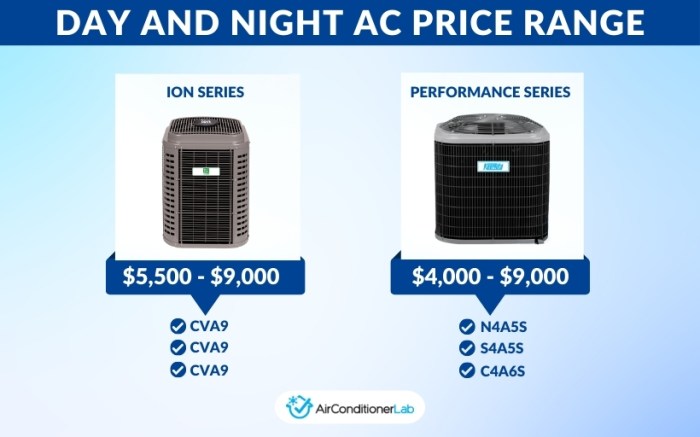
When comparing day and night air conditioners, one crucial aspect to consider is the cost associated with each type. This includes upfront costs, installation expenses, and long-term operational costs. Understanding the cost breakdown can help determine the overall cost-effectiveness of each option.
Upfront Costs
Day Air Conditioners:
- Higher initial purchase price due to increased demand during peak hours.
- Additional costs for premium features or advanced technology.
Night Air Conditioners:
- Potentially lower upfront cost compared to day units.
- Special discounts or promotions for off-peak usage.
Installation Expenses
Installing an air conditioner can also add to the overall cost. Here's how it breaks down:
Day Air Conditioners:
- May require professional installation services, leading to higher installation costs.
- Potential additional fees for installation during peak hours.
Night Air Conditioners:
- Potentially lower installation costs due to off-peak installation times.
- Opportunity for DIY installation to save on professional service fees.
Long-Term Operational Costs
Day Air Conditioners:
- Higher energy consumption during peak hours, resulting in increased electricity bills.
- Potential maintenance costs for units running at maximum capacity during the day.
Night Air Conditioners:
- Potentially lower energy consumption due to off-peak rates and cooler outdoor temperatures.
- Reduced wear and tear on the unit from operating during less-demanding hours.
Technology and Features
When it comes to air conditioners, the technology and features they offer play a crucial role in determining their overall performance and user experience. Let's take a closer look at the technology and features provided by day and night air conditioners.
Smart Capabilities
Both day and night air conditioners come equipped with smart capabilities that allow users to control and monitor the temperature settings remotely. These smart features enable users to adjust the temperature, set schedules, and even receive maintenance alerts through their smartphones or other connected devices.
However, night air conditioners may have more advanced smart capabilities compared to day air conditioners, providing a more seamless and convenient user experience.
Programmable Settings
Day and night air conditioners offer programmable settings that allow users to customize their cooling preferences based on their daily routine. These settings enable users to create specific temperature profiles for different times of the day, ensuring optimal comfort and energy efficiency.
Night air conditioners may offer more flexibility and customization options in their programmable settings, allowing users to fine-tune their cooling experience according to their needs.
Other Functionalities
In addition to smart capabilities and programmable settings, day and night air conditioners may differ in other functionalities as well. Night air conditioners might incorporate features like energy-saving modes, sleep modes, air purifiers, and noise reduction technologies to enhance the overall user experience.
These additional functionalities contribute to improved comfort, energy efficiency, and air quality, making night air conditioners a more attractive choice for some consumers.Overall, the technological advancements in night air conditioners make them stand out in terms of features and user experience compared to day air conditioners.
The enhanced smart capabilities, programmable settings, and other functionalities offered by night air conditioners contribute to a more efficient and comfortable cooling experience for users.
Maintenance Requirements

When it comes to maintaining your day and night air conditioners, there are specific requirements and routines that differ between the two. Proper maintenance is essential to ensure the units function efficiently and last longer. Let's delve into the maintenance needs of day and night air conditioners to help you understand how to take care of them properly.
Day Air Conditioner Maintenance
- Regularly clean or replace the air filters to maintain good airflow and indoor air quality.
- Check and clean the evaporator and condenser coils to prevent dust and debris buildup, which can affect cooling efficiency.
- Inspect and clean the drainage system to prevent clogs and water leakage.
- Ensure the thermostat is functioning correctly and calibrate it if necessary.
Night Air Conditioner Maintenance
- Similar to day air conditioners, clean or replace the air filters regularly to maintain optimal performance.
- Check and clean the coils to prevent dirt accumulation, which can hinder cooling capacity.
- Regularly inspect the refrigerant levels and top them up if needed to ensure proper cooling.
- Keep the outdoor unit clear of debris and vegetation to allow for adequate airflow.
Tips for Prolonging Air Conditioner Lifespan
- Schedule annual professional maintenance to ensure all components are in good condition.
- Avoid overworking the units by setting the temperature to an optimal level.
- Invest in a programmable thermostat to regulate cooling cycles efficiently.
- Keep the surrounding area clean and free of obstructions to promote better airflow.
Last Word
In conclusion, the debate between day and night air conditioners boils down to individual preferences and requirements. By weighing the factors discussed, you can determine which option emerges as the winner in enhancing your indoor climate control.
Top FAQs
Are day and night air conditioners fundamentally different in their operation?
While both serve the same purpose of cooling indoor spaces, day and night air conditioners can differ in terms of energy usage and specific features designed for their respective time of use.
Which type of air conditioner is more cost-effective in the long run?
The cost-effectiveness of day versus night air conditioners depends on various factors such as usage patterns, energy rates, and initial investment. It's essential to consider these aspects to determine which option offers better long-term savings.
Do day and night air conditioners require different maintenance routines?
Maintenance requirements for day and night air conditioners can vary, especially in terms of cleaning schedules and service needs. Understanding these distinctions can help prolong the lifespan and efficiency of your chosen unit.