
Embarking on the journey of selecting the perfect AC size for your space can be daunting yet crucial. This guide aims to shed light on the essential factors to consider, calculations to make, and room-specific details to ponder. Let's dive in and ensure you make the right choice for your cooling needs.
Factors to Consider
When selecting the right AC size for your room or home, there are several important factors to take into consideration to ensure optimal cooling efficiency.Identify the square footage of your room or home. This is crucial as it helps determine the cooling capacity needed to effectively cool the space.
Measure the length and width of the area and multiply these dimensions to get the square footage.Determine the ceiling height to understand the volume of the space. Higher ceilings require more cooling power to maintain a comfortable temperature. Measure the height from the floor to the ceiling to factor this in when choosing the AC size.Consider the climate or region you live in for cooling needs.
Hotter climates may require a larger AC unit to combat the heat, while milder climates may be adequately cooled with a smaller unit. Take into account the average temperatures in your area to make an informed decision.
Square Footage Calculation
To calculate the square footage of a room, simply multiply the length by the width. For example, a room that is 12 feet long and 10 feet wide would have a square footage of 120 square feet.
Ceiling Height Impact
Higher ceilings result in a larger volume of air that needs to be cooled. For rooms with taller ceilings, it is recommended to choose an AC unit with higher cooling capacity to effectively cool the entire space.
Climate Consideration
Regions with hotter climates require AC units with higher cooling capacities to combat the intense heat. Be sure to take into consideration the average temperatures in your area to select the appropriate AC size for your cooling needs.
Calculating the AC Size
Determining the right AC size for your room or home is crucial for optimal cooling efficiency. This involves understanding the BTU ratings and their significance in choosing the appropriate air conditioner.
Understanding BTU Ratings
BTU (British Thermal Unit) is a unit of measurement used to determine the amount of heat an air conditioner can remove from a room per hour. The higher the BTU rating, the more cooling power the AC unit has.
Calculating Required BTUs
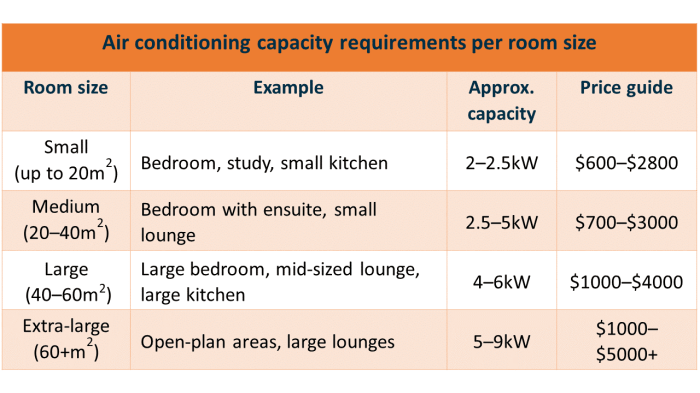
When calculating the required BTUs for your space, you can use a simple formula based on the room size. As a general guideline, you can estimate the needed BTUs by multiplying the square footage of the room by 20. However, it's essential to consider additional factors such as ceiling height, insulation, and sunlight exposure for a more accurate calculation.
Required BTUs = Room Area (in square feet) x 20
Significance of Right BTU Capacity
Choosing the right BTU capacity is not only essential for ensuring adequate cooling but also for energy efficiency. An oversized AC unit will cycle on and off frequently, leading to energy wastage and uneven cooling. On the other hand, an undersized unit will struggle to cool the space efficiently, resulting in higher energy consumption and increased wear and tear on the system.
By selecting the correct BTU capacity, you can optimize energy usage and maintain a comfortable indoor environment.
Room Specific Considerations
When determining the right AC size for your room, there are several factors specific to the room itself that need to be taken into account. These factors can significantly impact the cooling requirements and efficiency of the air conditioner.
Number of Windows and Doors
- The number of windows and doors in a room can greatly affect the cooling load. Windows and doors are potential areas of heat gain or loss, so rooms with more windows and doors may require a larger AC unit to compensate for this.
- Windows that receive direct sunlight during the day can introduce additional heat into the room, making it harder for the AC to cool effectively. Consider using curtains or blinds to block out direct sunlight if this is the case.
Orientation of the Room
- The orientation of the room in relation to the sun can impact how much heat the room absorbs. Rooms that face west or south tend to receive more sunlight and heat, requiring a larger AC unit to keep the space cool.
- Rooms that are well insulated can help reduce the heat gain from sunlight and external sources, making it easier for the AC to maintain a comfortable temperature.
Insulation and Ventilation
- Proper insulation can help keep the cool air inside the room and prevent heat from entering, reducing the workload on the AC unit. Make sure your room is well insulated to maximize the efficiency of your air conditioner.
- Good ventilation can also help improve the overall cooling efficiency of your AC unit. Proper air circulation can distribute cool air more effectively throughout the room, ensuring even cooling and reducing the strain on the air conditioner.
Types of Air Conditioners
When it comes to choosing the right air conditioner for your room or home, there are three main types to consider: window AC units, portable AC units, and split-system ACs. Each type has its own set of pros and cons, which can impact the cooling efficiency based on the size of the room.
Window AC Units
Window AC units are typically installed in a window frame or a specially designed wall opening. They are a popular choice for smaller rooms or apartments due to their ease of installation and affordability. However, they may not be the best option for larger rooms or homes as they are limited in cooling capacity.
- Pros: Easy to install, cost-effective, good for small rooms.
- Cons: Limited cooling capacity, may not be suitable for larger spaces.
Portable AC Units
Portable AC units are free-standing and can be moved from room to room as needed. They are a versatile option for cooling specific areas or rooms, especially if you don't want to install a permanent unit. Portable AC units are ideal for rooms where a window unit cannot be installed.
- Pros: Portable, versatile, no installation required.
- Cons: Less energy-efficient, may be noisy, limited cooling capacity.
Split-System ACs
Split-system ACs consist of two units: one indoor unit and one outdoor unit. They are more complex to install compared to window or portable units but offer better cooling efficiency and are suitable for larger rooms or homes. Split-system ACs are also quieter and more energy-efficient in the long run.
- Pros: Efficient cooling, quiet operation, suitable for larger spaces.
- Cons: Higher installation cost, requires professional installation.
End of Discussion
In conclusion, choosing the right AC size for your room or home is a decision that impacts comfort and energy efficiency. By carefully evaluating factors like square footage, ceiling height, and room specifics, you can ensure a cooling system that meets your requirements effectively.
Make an informed choice and enjoy a cool and comfortable environment all year round.
Essential Questionnaire
How do windows and doors impact AC sizing?
Windows and doors can affect AC sizing by allowing heat to enter or escape, thus influencing the cooling requirements of the space. Ensure proper sealing and insulation to optimize cooling efficiency.
What is the significance of room orientation for AC sizing?
Room orientation plays a crucial role in heat gain from sunlight. South-facing rooms receive more sunlight, increasing cooling needs. Consider this factor when determining the right AC size.
Can I install a window AC unit in a large room?
While window AC units are suitable for smaller spaces, they may not provide sufficient cooling for larger rooms. Consider split-system ACs for better coverage in larger areas.